
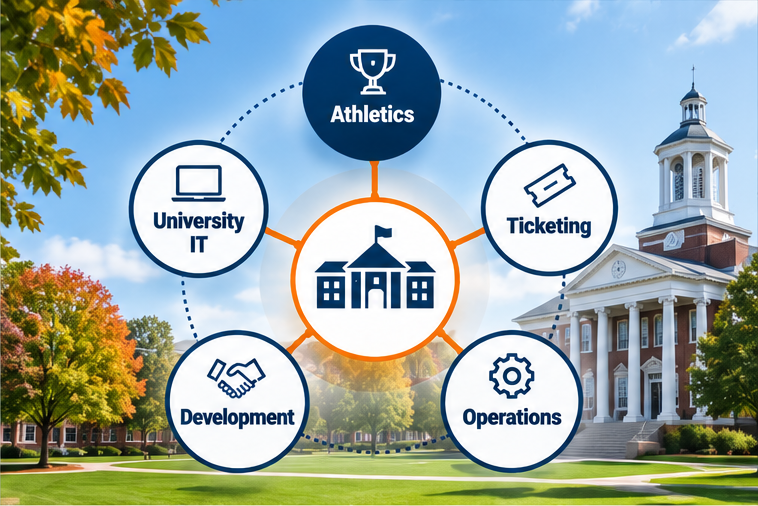
For university CIOs and IT leaders, this complexity presents a growing institutional concern. Athletic departments frequently develop independent technology environments to meet immediate operational needs, including separate Slack workspaces, ticketing applications, donor management platforms, and event coordination tools. Over time, these systems can expand without consistent oversight or integration with university-wide technology policies. Workspaces may remain active long after their original administrators have departed, while seasonal employees, student workers, and external vendors may retain access to information they no longer need. The result is a growing challenge involving institutional governance, security, and operational efficiency.
Slack Enterprise Grid provides a framework for bringing independently managed workspaces under centralized administration while allowing individual sports programs and departments to maintain their operational flexibility. University IT teams can establish consistent security policies, manage user access, and improve visibility across the organization without disrupting how individual teams collaborate. However, communication is only part of the equation. Athletic departments also depend on business systems that manage relationships with ticket holders, alumni, donors, corporate sponsors, and premium seating customers. Integrating Salesforce with Slack creates opportunities to connect this valuable information with the people responsible for acting on it, reducing reliance on disconnected emails, spreadsheets, and manual updates.
Consider the coordination required when preparing for a major college sporting event. Facilities teams manage venue readiness, ticketing departments handle customer inquiries, marketing professionals coordinate promotions, and hospitality personnel oversee premium guest experiences. Meanwhile, security, transportation, broadcast operations, and outside vendors must stay informed about schedules and last-minute changes. When these activities operate through separate communication channels, even routine issues can require multiple conversations and follow-ups. Connected Slack workflows and Salesforce service records can help departments assign responsibilities, communicate updates, track progress, and document resolutions, creating a more coordinated and accountable approach to event management.
For higher education leadership, connected systems can also provide a clearer understanding of organizational performance. Rather than gathering information from multiple applications and manually reconciling reports, institutions can use Salesforce analytics, integrated data sources, and operational dashboards to monitor ticketing performance, sponsorship commitments, service requests, and event-related issues. Slack’s native analytics can provide insight into communication activity, while additional integrated workflows can help track operational response times and outstanding responsibilities. The objective is not simply to collect more data, but to make existing information more accessible, reliable, and useful for decision-making.
Security and compliance remain equally important. Athletic departments regularly work with sensitive information involving student-athletes, employees, donors, and university operations. Frequent personnel changes further complicate access management. Centralized Slack administration, institutional identity systems, and appropriate Salesforce permissions can help universities establish consistent access controls and support more effective onboarding and offboarding. These capabilities, combined with institutional data governance policies, can strengthen oversight while allowing athletic departments to maintain the flexibility required for daily operations.
As universities modernize their technology environments, athletic departments represent an important opportunity to extend digital transformation across campus. The goal is not to eliminate the independence of individual sports programs or replace every existing application. It is to connect communication, operational workflows, and business information in ways that reduce complexity and improve collaboration. By integrating Slack Enterprise Grid, Salesforce, and existing university technologies, institutions can strengthen governance, improve operational efficiency, and support more informed leadership decisions. Ultimately, a more connected athletics enterprise is part of building a more secure, efficient, and collaborative university.
Interested in Learning More?
To learn how FocustApps can help your institution evaluate its Slack environment, explore Salesforce integration opportunities, and develop a more connected approach to athletic operations, contact Brian at 859.803.1988 for more information.
