

Slack

What College Athletics Can Learn From Professional Sports About Connected Operations

College athletic departments are operating in an increasingly complex environment where success extends far beyond what happens on the field. Athletic directors and their leadership teams are responsible for ticketing, sponsorships, donor relationships, marketing, fan engagement, facilities, and game-day operations—all while managing growing expectations and limited resources. Professional sports organizations face many of these same challenges, and several are turning to connected technology platforms to bring customer information, operational workflows, and communication together. Organizations such as Pacers Sports & Entertainment, the Indiana Fever, the Sacramento Kings, and Visa Cash App Racing Bulls Formula 1 offer valuable examples of how Salesforce, Slack, and emerging AI capabilities can support more responsive operations. While collegiate athletics operates under different financial and organizational constraints, the underlying lesson is relevant: better connections between people, systems, and information can help athletic departments work more effectively.

What College Athletics Can Learn From Professional Sports About Connected Operations Read More »
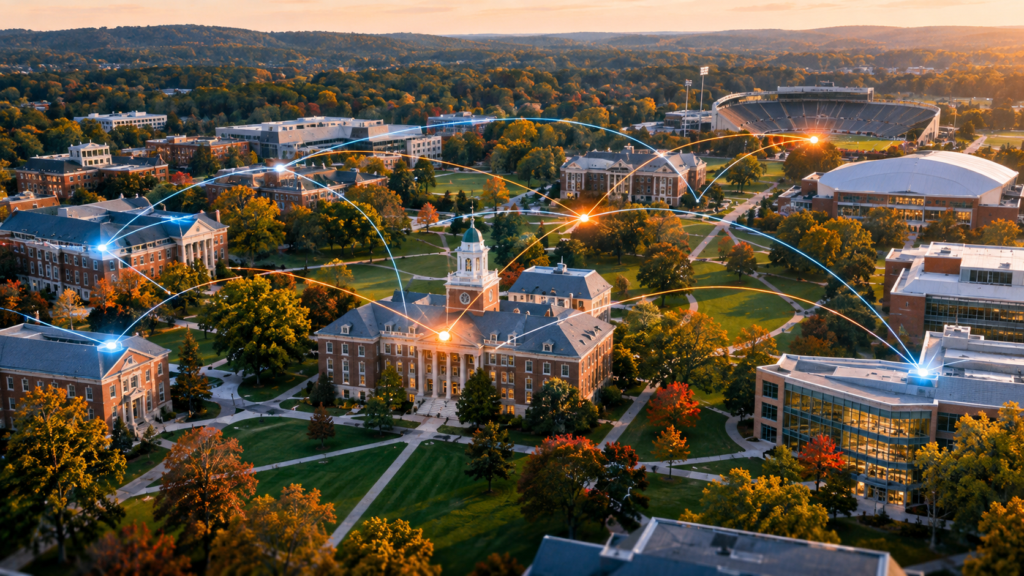
What Higher Education Can Learn From Professional Sports About Connected Operations

Colleges and universities are managing increasingly complex organizations where information, technology, and communication must work across departments with very different responsibilities. From admissions and advancement to athletics, student services, facilities, and campus operations, institutional leaders face growing pressure to improve efficiency, strengthen constituent relationships, and make informed decisions with limited resources. Interestingly, professional sports organizations are confronting many of these same challenges. Organizations such as Pacers Sports & Entertainment, the Indiana Fever, the Sacramento Kings, and Visa Cash App Racing Bulls Formula 1 are using or planning connected technology initiatives involving Salesforce, Slack, and AI to improve customer engagement and operational coordination. While universities have broader educational missions and different governance requirements, these examples offer important lessons about connecting fragmented information, improving collaboration, and building a more responsive institution.

What Higher Education Can Learn From Professional Sports About Connected Operations Read More »

Beyond Game Day: How Slack and Salesforce Are Changing the Way College Athletic Departments Operate

College athletics has evolved into a complex, multifaceted enterprise that extends far beyond competition on the field or court. Today’s athletic directors oversee organizations responsible for generating revenue, managing facilities, coordinating events, engaging alumni and donors, supporting student-athletes, and maintaining relationships with corporate sponsors. Behind every successful athletic program is an extensive network of administrators, coaches, marketing professionals, ticketing personnel, development officers, and operational teams. Yet despite the growing sophistication of college athletics, many departments still rely on disconnected communication platforms, independent databases, and manual processes that make collaboration more difficult than it needs to be.

Beyond Game Day: How Slack and Salesforce Are Changing the Way College Athletic Departments Operate Read More »

The Hidden Complexity of College Athletics: Why Connected Communication and Data Matter More Than Ever

College athletic departments have become some of the most operationally complex organizations on university campuses. Beyond managing sports programs and competitive events, athletics administrators oversee facilities, ticketing, fundraising, marketing, corporate partnerships, and student-athlete services. These responsibilities require constant coordination among departments that often operate independently, using different communication tools, databases, and business applications. While universities continue investing in digital transformation, many athletic departments still rely on fragmented systems that limit collaboration, reduce visibility, and create unnecessary administrative challenges.

The Hidden Complexity of College Athletics: Why Connected Communication and Data Matter More Than Ever Read More »

The End of Spreadsheet-Based Slack Chargebacks for Higher Education

As colleges and universities continue to expand their use of Slack across academic departments, research teams, administrative offices, and student organizations, managing the financial side of collaboration has become increasingly complicated. What may have started as a handful of independently managed Slack workspaces can quickly grow into hundreds of departmental environments, each with its own users, budgets, and administrative responsibilities. While Slack has become a valuable tool for connecting people across campus, determining who pays for it can create an entirely different challenge. For many higher education IT and finance teams, tracking licenses, allocating expenses, and reconciling departmental charges still involves spreadsheets, manual reports, and endless email exchanges. At a time when universities face growing pressure to control technology spending and demonstrate financial accountability, outdated chargeback processes are becoming an unnecessary administrative burden.

The End of Spreadsheet-Based Slack Chargebacks for Higher Education Read More »

Why Higher Education Procurement Teams Are Struggling with Slack Billing Complexity

For a university procurement team, understanding Slack spending can require more than reviewing a subscription invoice. A department may have purchased its own plan. A research group may manage another workspace. An administrative office may pay through a separate budget. Each purchase can make sense locally, while the institution still struggles to establish a complete picture of what it is buying, who is using it, and who is responsible for managing it.

Why Higher Education Procurement Teams Are Struggling with Slack Billing Complexity Read More »

The University IT Leader’s Guide to Slack Enterprise Grid Migration

For many colleges and universities, Slack did not begin as an enterprise-wide technology decision. Individual departments adopted it. Research teams created their own workspaces. Administrative groups found new ways to collaborate, and faculty-built communities around projects and programs. Over time, what started as flexible, decentralized adoption can grow into hundreds—or even thousands—of separate Slack workspaces operating across an institution. For university IT leaders, the challenge becomes clear: how do you bring those environments under centralized management without disrupting the collaboration people depend on every day?

The University IT Leader’s Guide to Slack Enterprise Grid Migration Read More »

How Universities & Colleges Can Consolidate Slack Without Disrupting Faculty and Department Independence

Universities are decentralized by design. Colleges, academic departments, research labs, administrative offices, student-facing teams, and specialized programs each have their own responsibilities, cultures, and ways of working. That independence is essential to higher education, and it is one reason collaboration platforms like Slack have often grown organically across campuses. A department discovers a tool that works, creates a workspace, and begins collaborating without waiting for a university-wide technology initiative.

How Universities & Colleges Can Consolidate Slack Without Disrupting Faculty and Department Independence Read More »

FERPA, HIPAA, and Shadow IT are the Growing Slack Challenge 

Slack has become an important collaboration tool across higher education. Faculty use it to communicate with colleagues and research partners, administrative teams coordinate projects and student services, and departments rely on it to keep work moving across increasingly complex institutions. But as Slack usage expands organically across campus, many universities are discovering a difficult reality: they may not have full visibility into where Slack is used, who has access, or what information is shared.

FERPA, HIPAA, and Shadow IT are the Growing Slack Challenge  Read More »

How Enterprise Grid Helps Universities Solve Slack Security and Compliance Gaps

Collaboration across higher education has become more digital, distributed, and complex than ever. Faculty members work across departments and institutions, researchers collaborate with external partners, administrative teams coordinate critical campus services, and students expect the same fast, flexible communication tools they use everywhere else. Slack has become an important part of that environment for many colleges and universities. But as Slack usage expands across campus, so does the responsibility to protect institutional data, maintain appropriate access controls, and meet increasingly complex security and compliance requirements.

How Enterprise Grid Helps Universities Solve Slack Security and Compliance Gaps Read More »

Not Sure What You Need?

We're Here To Help

Choosing the right software solution can feel overwhelming. Our team specializes in guiding businesses through the discovery process to uncover solutions that truly make an impact.